Post-Flood Disinfection Spraying in Lat Krabang 2026: Luang Phaeng Road at Lotus Lat Krabang, Lat Krabang Road Soi 14/1 and Soi 30/1
Last updated: 3 Oct 2026 | 3 Views |
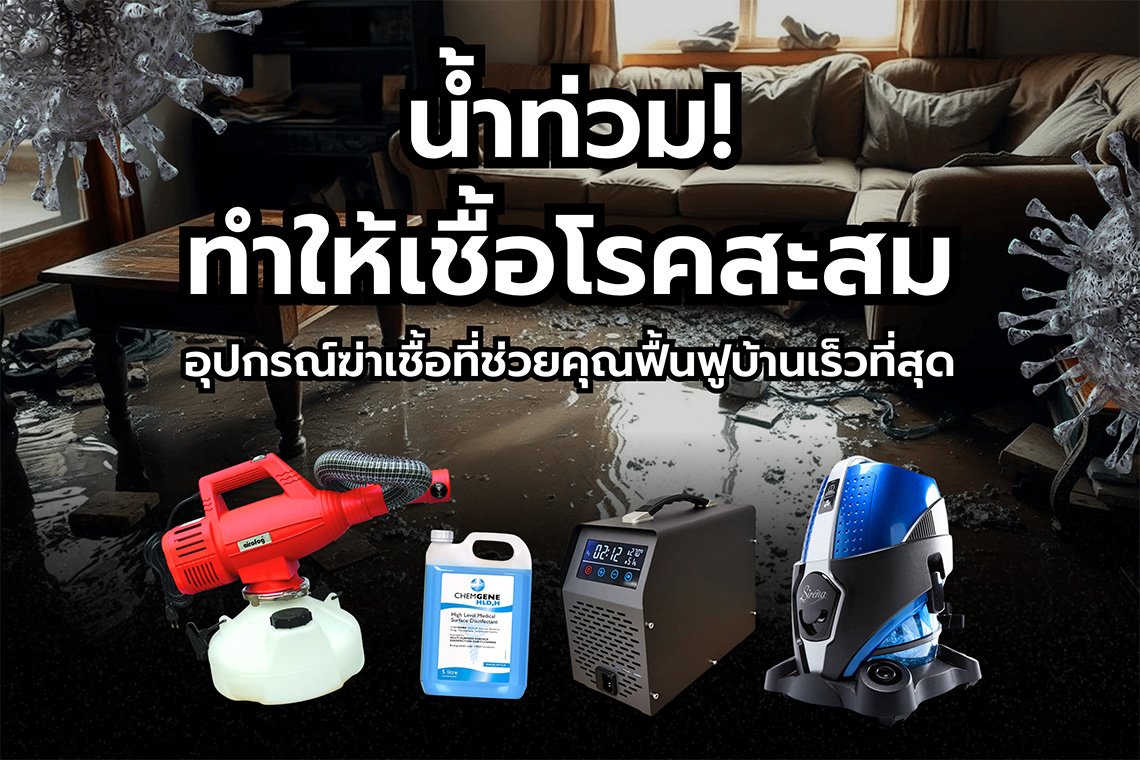
Post-Flood Disinfection Spraying in Lat Krabang 2026: Luang Phaeng Road at Lotus Lat Krabang, Lat Krabang Road Soi 14/1 and Soi 30/1, and What Shops and Shophouses Should Do After the Water Drops
A typical scenario (an illustrative story to show the problem, not a review or quote from any specific customer)
The morning the curry shop on Lat Krabang Road could not open its shutter
For more than ten years, a two-unit shophouse near the mouth of Lat Krabang Soi 30/1 has been both a rice-and-curry shop and a home for Nid's family. Upstairs live Nid's mother, in her seventies, and her five-year-old granddaughter. In late September 2026 the rain kept falling for days. Water on Lat Krabang Road rose until cars had to crawl, and murky, tea-coloured water flowed off the road to the shop's threshold, then seeped under the roller shutter and across the tiled floor. Nid and her husband carried the rice upstairs, but the fridge, the table legs and the lowest shelves still sat in water full of mud, leaves, plastic bags and the smell of overflowing drains.
Two days later the road was clear. Mud had packed into the shutter rails, and inside a thin film of silt coated every surface the water had touched. Food waste from the bin behind the shop had floated everywhere, and a sour, musty smell made her granddaughter cover her nose. The whole family shovelled mud, scrubbed the floor with dish soap, poured bleach in the corners and ran fans all night. The next day Nid reopened, because regular customers from nearby workplaces were asking every day and the shop had already lost several days of income.
Three days after reopening, Nid's husband developed a fever and calf pain so strong he could barely walk. He remembered wading through the water in flip-flops to move his motorbike, with a small scrape on his ankle. At the same time the little girl had diarrhoea for two days. Nid took them both to a doctor straight away; the doctor asked about wading in floodwater and ordered further tests. Waiting for the results, Nid looked at the shop she had scrubbed until it "looked clean" and began to wonder whether the usual routine was enough. This time the water that came in was not clean rainwater. It had run across roads, through drains and past the rubbish of the entire neighbourhood.
Stories like this are close to home for many people in Lat Krabang in 2026. This article explains where flooding was reported in the area, which germs follow floodwater, why do-it-yourself cleaning often falls short for food shops, stores and shophouses that serve customers, and how the disinfection spraying service from World Health Disinfection (WHD) helps close that gap, always after mud removal and washing, never instead of them.
Where Lat Krabang flooded in late September 2026, according to news reports and BMA announcements
The big picture first. According to news reports, from 24 to 27 September 2026 Bangkok received roughly 300 mm of rain in about 48 hours. On 26 September 2026 the Bangkok Metropolitan Administration (BMA) declared all 50 districts a disaster zone, and the Department of Disaster Prevention and Mitigation reported on 2 October 2026 that about 329,000 Bangkok households had been affected. The eastern side of the city, including Lat Krabang district, had several reported flood points.
According to a Thai PBS report on 29 September 2026 at 13:19 (depths are water on the road surface at that time), the points relevant to Lat Krabang were:
- Luang Phaeng Road at Lotus Lat Krabang: about 20 cm of standing water.
- Lat Krabang Road Soi 30/1: about 10 cm.
- Lat Krabang Road between Khlong Thap Yao and Soi Lat Krabang 14/1: listed as a flood point.
- Lat Krabang Road between Khlong Bua Kra and Kingkaew Junction: listed as a flood point.
- Chao Khun Thahan Road: standing water at several points, about 5 to 20 cm.
- Romklao Road, which links Lat Krabang with Min Buri, was listed in the same report as flooded along several stretches.
For shophouses and stores along Luang Phaeng Road and Lat Krabang Road, 10 to 20 cm on the road is enough to push water over the threshold of any unit whose floor sits lower than the street, especially when passing vehicles send waves toward the shopfront. And the water on the road is not just rain; it includes overflow from drains and local canals, carrying whatever is in the drainage system.
Depth does not tell you how contaminated the water was, and the dampness that lingers afterwards is exactly what germs and mould like.
Sources: Thai PBS (29 September 2026) and related reports listed at the end. Depths are as reported at that time; conditions in individual sois may differ.
The germs that follow floods, and why Lat Krabang food shops and shophouses should care
The Luang Phaeng and Lat Krabang Road corridor is a mixed residential and commercial area: shophouses, made-to-order food stalls, rice-and-curry shops, convenience stores, rented rooms and steady foot traffic all day. After a flood, the germs that matter most here are those linked to food, sewage and many people touching the same surfaces.
1) E. coli and faecal bacteria
When drains overflow, road water mixes with wastewater from homes and shops, which carries bacteria from human and animal intestines. E. coli is a key indicator of faecal contamination, and some strains cause severe diarrhoea, cramps or bloody stools. In a restaurant the risk points are the kitchen floor, prep counters, table legs, ice buckets and anything stored low. If these are not cleaned thoroughly before use, germs can move from a cook's hands into a customer's meal.
2) Salmonella
Salmonella causes food poisoning and is found in animal waste and sewage. Typical symptoms are fever, stomach pain, diarrhoea, nausea and vomiting. Shops that rely on eggs, chicken or other meat should be especially careful: if chopping boards, fridges or ingredient shelves were reached by floodwater and fresh stock is placed on them before the surfaces are disinfected, the risk rises immediately.
3) Norovirus and rotavirus
These two virus groups are major causes of acute diarrhoea. Norovirus spreads very easily through contaminated surfaces, hands and food, while rotavirus is common in young children and can dehydrate them quickly. Commonly overlooked spots include the back-of-shop toilet, taps, door handles and stair rails that the whole household shares. Once one person falls ill, others can follow in a chain.
4) Leptospirosis
Leptospira bacteria live in the urine of rats and some other animals. Floods spread them through water and mud, and people are infected by wading or touching mud with broken skin, or through the eyes and mouth. Key symptoms are sudden high fever, headache, muscle pain especially in the calves, and red eyes. Areas with many food shops and rubbish bins often have rats, so be careful with mud-stained surfaces after the water drops: back floors, storage crates and the corners of ingredient rooms. Thailand's Department of Disease Control advises anyone with fever and calf pain after wading to see a doctor promptly and mention the exposure.
5) Hand, foot and mouth disease and RSV in young children
Many Lat Krabang shophouses are both a business and a family home with small children. After the flood, children often play downstairs or at the shopfront, pick up toys that fell on the floor, or hold the stair rail and then put their hands in their mouths. Hand, foot and mouth disease spreads through saliva, nasal secretions and contaminated surfaces. RSV is a respiratory virus that can make young children and older adults seriously ill. Disinfecting frequently touched surfaces helps reduce spread.
6) Mould and musty smells
After the water recedes, lower plaster walls, wooden door frames, the space under cabinets and cardboard boxes in storerooms stay damp for days. Mould can start growing within 24 to 48 hours if humidity remains high, which is why agencies such as the CDC advise cleaning and drying as quickly as possible. Mould creates black or green stains and a smell customers notice the moment they walk in. For people with allergies or asthma, spores can trigger symptoms.
Who is most at risk
Older adults, young children, pregnant women and people with chronic conditions such as diabetes, kidney disease or weakened immunity are more likely to become seriously ill. So are cooks, shop staff and anyone who has to wade to work every day, because they touch contaminated water and surfaces more often than others.
What shops and families around Luang Phaeng and Lat Krabang Road actually face
Health. Common post-flood problems are diarrhoea, itchy rashes, infected wounds, fever after wading and allergy flare-ups from mould.
Money. Every day a shop stays closed is lost revenue. Reopen too early in a space that is not clean enough, and the chance of customers getting sick could force another closure and lose regulars.
Time. Many families spend days shovelling and scrubbing and still are not sure the job is done.
Reputation. In a neighbourhood where people know each other, one sentence like "I got sick after eating there" can hurt sales for a long time. A customer who smells mustiness or sees mould on the wall may not return, even when the owner has done their best.
Family. Worry about grandchildren and elderly parents living above the shop keeps people awake. Every cough or fever raises the same question: was it the flood?
Why washing on your own often is not enough for a flooded shop or shophouse
Bleach only where you can see dirt. Many people pour bleach on the floor and mop it straight away, without diluting it correctly or leaving the contact time stated on the label, which reduces its effect. Table legs, shutter rails and the wall behind shelving often get skipped. Mixing different cleaning chemicals can also release dangerous gases.
Fans make surfaces look dry. Fans dry the surface faster, but moisture stays in plaster, under loose tiles and inside wood.
Air freshener covers the smell. It feels better for a while but does nothing about bacteria and mould that may still be growing. When the fragrance fades, the mustiness returns.
Painting over mould. Some shops repaint quickly to look clean. If the wall is still damp and mould remains underneath, the paint blisters and stains reappear within weeks.
Cleaning only the ground floor. Germs do not stay where the water was. Shoes, hands and clothes carry them upstairs, so stair rails, door handles and light switches also need disinfecting.
None of this means home cleaning is useless. Removing mud and washing thoroughly is the most important step and must always come first. But for spaces that serve customers, prepare food or house children and elders, finishing with disinfection spraying by trained technicians covers surfaces that hand cleaning misses.
How WHD post-flood disinfection spraying works in Lat Krabang
World Health Disinfection (WHD) provides a disinfection spraying service for homes, shops, buildings and businesses. According to the service information, trained technicians spray and/or ULV-fog (Ultra Low Volume), producing a fine mist that spreads across rooms and surfaces and reaches corners that wiping by hand cannot.
The disinfectant is CHEMGENE HLD4H, a medical-grade disinfectant from the United Kingdom containing Benzalkonium Chloride and Didecyldimethylammonium Chloride, according to the service information. The service page lists effect against viruses, bacteria and fungi including COVID-19, RSV, H1N1, H5N1 and hand, foot and mouth virus, with a stated efficacy of 99.99%. The page also lists approvals and references from Thailand's Department of Medical Sciences, Mahidol University, NHS England and the EN 14476:2013+A2:2019 standard.
The process, according to the service information
- Book. Call 065-556-6294 or add LINE @whd268 and describe the location, for example a shophouse on Lat Krabang Road, a store near Lotus Lat Krabang or a house in a soi, plus the size and use of the space.
- Prepare the area. Remove mud, wash and wipe surfaces first. Pack away food, ingredients, food containers and personal items, and switch off unnecessary electrical equipment.
- Technicians spray. Occupants, customers and pets should leave the zone being treated.
- Wait about 30 minutes, according to the service information, but always follow the re-entry time the technicians give on site.
- Use the space normally. Ventilate, then return to the shop or home.
According to the service information, WHD serves hospitals, schools, shopping malls, airports, offices, airlines, banks and residential buildings. A current promotion includes a free CHEMGENE spray bottle and WELLGIENIC wet tissues with the service, and a tax invoice is available, which is useful for shops and companies recording the expense.
Honest note: disinfection spraying comes after mud removal and washing. It does not replace cleaning, drying or structural repair. The disinfectant is a chemical, so nobody should stay in the zone being sprayed, and everyone should follow the technicians' re-entry instructions. Anyone who feels ill should see a doctor; spraying is not medical treatment.
10 reasons Lat Krabang shops and homes choose disinfection spraying after the flood
- Reopen with more confidence. After washing, professional disinfection spraying finishes the job on surfaces customers and staff touch most, before you welcome people back.
- ULV mist reaches corners under counters, behind fridges, along shutter rails and beneath shelving where a mop cannot go.
- Medical-grade disinfectant. The service page describes CHEMGENE HLD4H as used in medical settings and references EN 14476:2013+A2:2019.
- Broad coverage. The page lists viruses, bacteria and fungi, including RSV and hand, foot and mouth virus, which matter for homes with toddlers.
- Short turnaround. The service information says to wait about 30 minutes after spraying before using the space, helpful for shops eager to reopen.
- Less repeated scrubbing. Instead of washing again and again without certainty, technicians handle the disinfection step systematically.
- Protects the people upstairs. In shophouses with elders and children, both the ground floor and shared touch points such as stairs, rails and bathrooms can be treated.
- Fits many kinds of spaces. WHD works from residential buildings to hospitals and airports, so the job can be scaled to a small shop or rental block. See more on the disinfection service page.
- Tax invoice available for registered shops and companies that need expense records.
- Take-home extras. The CHEMGENE spray and WELLGIENIC wet tissues help with small daily wipe-downs afterwards, subject to the promotion terms on the service page.
Before and after: a Lat Krabang Road shop that follows the right order
Before (washing alone)
- A thin layer of silt still sits under the counter and in the shutter rails.
- A sour, musty smell returns every morning at opening time.
- Nobody is sure the chopping boards, shelves and fridge are safe yet.
- The family worries whenever the toddler plays downstairs.
- Regulars ask if the shop is ready, and the owner cannot answer with confidence.
After (wash, dry, then spray)
- Mud removed and every surface washed, then the whole ground floor disinfected.
- Shared touch points such as handles, stair rails and the toilet treated.
- A clear sequence the owner can explain to customers.
- The family returns after the technicians' stated time and ventilates.
- Spray and wet tissues on hand for everyday touch points.
Example case: a rental block near Khlong Bua Kra and Kingkaew Junction
Example case (a hypothetical scenario reflecting common problems, not a real customer testimonial)
Tom manages a three-storey, twenty-room rental building in a soi off Lat Krabang Road between Khlong Bua Kra and Kingkaew Junction, one of the stretches news reports listed as flooded. Most tenants work locally, and a few rooms house families with small children. During the flood, water entered the motorbike parking area, the ground-floor corridor, the coin laundry room and five ground-floor rooms.
When the water went down, Tom hired helpers to shovel mud and hose the corridor, and ground-floor tenants cleaned their own rooms. Within a week, one tenant called to say the laundry room smelled terrible, another said her child had a rash and a fever, and a third asked directly whether anything more would be done, because she did not want her child playing in the corridor that had flooded.
He contacted WHD to spray all common areas: the parking area, ground-floor corridor, every stairway, the laundry room and the ground-floor rooms whose tenants agreed. Before the appointment, tenants were asked to clean their rooms, pack away food and personal items and leave the treatment zones at the scheduled time. On the day, technicians worked zone by zone and told everyone when they could re-enter. Tom posted a notice with the disinfection date and asked anyone feeling unwell to see a doctor, especially anyone who had waded and then developed fever or calf pain.
What Tom gained was not a promise that nobody would fall ill again, but tenants who could see the owner cared and followed a proper process. The laundry room went back into normal use, and Tom kept the tax invoice as a record of building-care expenses.
Recovery checklist for Lat Krabang shops and homes, before and after spraying
Before spraying
- Cut ground-floor power if water reached the sockets, and have an electrician check before switching back on.
- Wear boots, rubber gloves and a mask while shovelling, and cover any cuts.
- Throw out food, ingredients and drinks touched by floodwater, including anything with wet or swollen packaging.
- Remove all mud, then wash floors, lower walls, table legs, shutter rails and under cabinets with clean water and detergent.
- Take absorbent furniture such as fabric cushions, mattresses and cardboard boxes outside to dry, or discard them if badly damaged.
- Open doors and windows and use fans to dry quickly, ideally within 24 to 48 hours, in line with general public-health advice.
- Pack food containers, chopping boards, cutlery and personal items in sealed boxes before the appointment.
- Tell the technicians where water entered, where the smell is strongest and which areas children and elders use most.
During and after spraying
- Everyone, including pets, leaves the zone being sprayed and waits for the technicians' all-clear.
- Ventilate after re-entering.
- Rinse food containers and chopping boards with clean water before use.
- Wipe shared touch points daily: handles, the payment counter and stair rails.
- Watch for returning mould or mustiness, which can signal trapped moisture that must be fixed at the source.
- If a musty smell lingers in closed rooms, consider the residential ozone disinfection service as a complement.
- Anyone with fever, calf pain, diarrhoea or a rash after the flood should see a doctor and mention wading.
FAQ: post-flood disinfection spraying in Lat Krabang
Q: My shop is on Luang Phaeng Road near Lotus Lat Krabang and only a little water came in. Do I need spraying?
A: It depends on the business. For food shops, busy stores or homes with toddlers and elders, even a small amount of road and drain water is a reason to disinfect surfaces after cleaning, to reduce bacteria and viruses carried by the flood.
Q: Can spraying replace washing?
A: No. Spraying must come after mud removal and washing, because dirt prevents the disinfectant from reaching surfaces properly.
Q: Do we need to leave during spraying?
A: Yes, people and pets should leave the zone being treated. The service information says to wait about 30 minutes, but follow the technicians' on-site instructions.
Q: What disinfectant is used?
A: CHEMGENE HLD4H, a UK medical-grade disinfectant containing Benzalkonium Chloride and Didecyldimethylammonium Chloride, according to the service information.
Q: Does it prevent leptospirosis?
A: Disinfection reduces contamination on cleaned surfaces, but it is not full protection. Wear boots, cover wounds, avoid wading, and see a doctor at once if you develop fever or calf pain after wading.
Q: Can a single-unit shophouse book the service?
A: Yes. Share the size and use of the space by phone at 065-556-6294 or LINE @whd268 to get details and book.
Q: Is a tax invoice available?
A: Yes, according to the service information.
Finished washing? Let trained technicians complete the job before customers come back
For shops, shophouses, rental rooms and homes in Lat Krabang, along Luang Phaeng Road and Lat Krabang Road
Book post-flood disinfection in Lat Krabang
Call 065-556-6294 · LINE @whd268
Related links
- World Health Disinfection spraying service
- CHEMGENE HLD4H disinfectant
- Residential ozone disinfection for post-flood mustiness
References
- Thai PBS, Bangkok flood points and water levels, 29 September 2026: thaipbs.or.th/news/content/558830
- Dailynews, Bangkok flood situation, 29 September 2026: dailynews.co.th/news/6232155
- Posttoday, Bangkok flood summary: posttoday.com/blogs/general-news/749418
- Department of Disease Control, Thailand: ddc.moph.go.th
- CDC Floods: cdc.gov/floods
- WHO Fact sheets: who.int/news-room/fact-sheets
Keywords: post-flood disinfection Lat Krabang, disinfection spraying Lat Krabang, Lat Krabang flood 2026, Luang Phaeng Road flood, Lotus Lat Krabang flood, Lat Krabang Road Soi 30/1, Lat Krabang Soi 14/1, disinfection service Bangkok, Chemgene HLD4H, restaurant disinfection after flood


