New Epoxy Floor Smell in Shops and Factories After the 2026 Bangkok Floods: Why the Sharp Odour Lingers and How Ozone Removes Chemical Residue
Last updated: 1 Oct 2026 | 21 Views |
New Epoxy Floor Smell in Shops and Factories After the 2026 Bangkok Floods: Why the Sharp Odour Lingers and How Ozone Removes Chemical Residue
A typical scenario (an illustrative situation, not a review from any specific customer)
A gleaming new floor, and within an hour the staff have headaches
In late September 2026, days of relentless rain pushed Bangkok under water. According to news reports, roughly 300 mm of rain fell in about 48 hours, and on 26 September 2026 the Bangkok Metropolitan Administration declared all 50 districts a disaster zone. The eastern side of the city was hit hardest. One of the many businesses caught in it was a small paper-packaging workshop run by Somchai, tucked down a side street off Si Burapha Road, where water sat on the factory floor at almost knee height for several days.
When the water finally drained away, it left a thin film of mud everywhere, rainbow streaks of oil that had floated up from the forklift bay, and an old epoxy floor lifting in sheets where moisture had crept underneath the coating. Somchai decided to strip the ground floor and lay a completely new epoxy system, because his biggest customer needed deliveries to restart as soon as possible. The contractors worked through the night, and the new floor came out smoother and glossier than the original.
On the morning the line restarted, a sharp, ammonia-like smell mixed with solvent hung over the whole building. Within the first hour, two packers complained of headaches and stinging eyes, and a colleague who already had allergies began coughing and could not stop. The quality team worried that the smell would transfer to the cartons going out to a food-industry client. In the little retail counter next to the workshop, the first walk-in customer asked straight away, "Are you painting something? The smell is really strong."
Somchai switched on every industrial fan, rolled up every shutter, and scattered bags of charcoal and coffee grounds in the corners. But rain kept returning in bursts, the outside air was saturated, and the smell clung on far longer than he expected. Variations of this story played out in shops, restaurants, showrooms and factories across the city as owners raced to repair floors and reopen after the Bangkok floods of 2026.
Why so many shops and factories are re-coating epoxy floors right now
Epoxy is the go-to floor finish for factories, warehouses, commercial kitchens, labs, clinics, car showrooms and retail spaces that need a hard-wearing, seamless, easy-to-clean surface. But when floodwater sits on it for days, water and humidity can push through hairline cracks and edges and get underneath the coating. The epoxy then blisters, delaminates or peels away. When the flood also carried mud, sewage and oil, the old floor is often so contaminated that owners choose to grind it off and start again.
According to news reports, Governor Chadchart said the canals were full and that draining the city would take two to three days after the rain stopped. As of 30 September 2026, some roads, including Si Burapha and Lat Phrao, still had 20 to 40 cm of standing water. Thai media widely compared the event with the great floods of 2011, and one Thai business report cited a Chamber of Commerce estimate of around 12,300 million baht in damage. That figure is a reminder of how many businesses are rushing to repair and reopen, and floors are one of the first things they have to fix.
The catch is that this rush is happening while it is still raining, the air is humid, and temperatures swing between day and night. Those are far from ideal curing conditions for epoxy, so the odour is often stronger and lasts longer than it would on a job completed in the dry season.
Where epoxy floor smell comes from: the chemistry in plain language
Most floor epoxies are two-part systems: a resin and a hardener. Mixed together, they react and harden into a tough plastic layer. During application and for some time afterwards, some components evaporate into the air, and that is what you smell. Many of these substances fall into the broad family known as volatile organic compounds, or VOCs.
The usual sources of the smell
- Amine hardeners, which give off the sharp, ammonia-like or "fishy chemical" odour that many people recognise the moment they walk into a freshly coated space.
- Solvents and thinners used in systems that are not solvent-free, added by some manufacturers to help the material level out, which evaporate in the early days.
- Primers and levelling compounds applied before the topcoat, some of which have their own distinct smell.
- Thinner and cleaning solvent used by contractors to wash rollers and mixing buckets; if these are left inside the building, they keep adding to the odour.
- Polyurethane or other topcoats that some jobs add on top of the epoxy, each with a different chemical signature.
Why the smell lingers unusually long after a flood
- High humidity slows curing and can sometimes leave a tacky film or a cloudy "blush" on the surface, which in turn holds on to odour.
- Sealed buildings: many owners kept shutters and doors closed during the floods to keep out rain and looters, so there is almost no air exchange.
- Porous materials such as cardboard, fabric, ceiling insulation, foam, chair cushions and bare plaster absorb odour molecules and slowly release them again later.
- Layered odours: mud, stagnant water, mustiness and oil residue left by the flood mix with the new chemical smell, creating a complex odour that no single trick can fix.
An important point: "I can't smell it anymore" is not the same as "the VOCs are gone." The human nose adapts quickly. People who spend all day in the space may feel the smell has faded while a visitor walking in notices it immediately. Measuring TVOC (total volatile organic compounds) with an instrument gives a far more realistic picture than relying on how the air feels.
Who is affected by VOCs from epoxy floors, and what symptoms to watch for
Short-term exposure to vapours from floor coatings typically causes irritation: stinging or watering eyes, a burning nose, a dry throat, coughing, headache, dizziness, nausea and unusual tiredness. Skin contact with uncured material can cause dermatitis or allergic reactions, which is well known among flooring contractors and is why gloves and protective equipment matter.
People who need extra care
- Anyone with asthma, allergies or chronic lung disease, whose symptoms vapours can easily trigger.
- Pregnant women, who should avoid spaces with strong chemical smells until the air returns to normal.
- Older adults and young children, for example customers who come into a shop with their families, or homes that share a wall with a workshop.
- Staff who spend the whole shift inside, especially in packing, warehousing and front-of-house roles.
- People recovering from illness after wading through floodwater, whose bodies may be more sensitive to irritants than usual.
If a worker or customer has severe symptoms, such as difficulty breathing, chest tightness, or symptoms that don't improve after leaving the area, they should see a doctor promptly. Likewise, anyone who waded through floodwater and then develops fever, calf-muscle pain, diarrhoea or an infected wound should see a doctor, because these can be signs of water-borne illness such as leptospirosis. That is a medical matter; odour removal and ozone treatment cannot treat it.
The impacts business owners tend to underestimate
Staff health and safety
A worker who has a headache or stinging eyes all day loses concentration, and the risk of accidents around machinery and forklifts rises. Some people call in sick; others ask to move stations. At a time when everyone has just been through the stress of flooding at home, a chemical smell at work becomes one more burden.
Product quality
Goods that absorb odours easily, such as cartons, food packaging, textiles, clothing, leather, dry snacks, coffee beans or anything displayed unwrapped, can pick up a chemical smell and lead to returns or complaints. For a factory supplying the food industry, odour is a quality issue that clients take seriously and may audit.
Revenue and time
Every day a shop is closed, or only partly open, is lost income. After a major flood, most businesses have already gone days without revenue. Waiting for the smell to fade on its own, with no plan, can stretch that out for weeks, especially while the rain continues and the air stays damp.
Reputation
A customer who walks in and meets a wall of chemical smell may simply turn around and leave. An online review saying "the chemical smell was overpowering" can outlast the actual smell. Restaurants, cafés and clinics feel this most, because customers expect a clean, safe atmosphere.
Community relations
A workshop or shop on a residential soi can attract complaints if the smell drifts into neighbouring homes, even though every household on the street has just come through the same flood.
Why the usual fixes often fall short
Fans and open doors alone
Ventilation is essential and should always be part of the plan. But during days of rain, outside air is saturated and often still, so fans mostly churn the same indoor air around. Odour molecules that have soaked into porous materials don't simply leave because a breeze passes over them.
Air fresheners and fragrance
Fragrance masks a smell; it doesn't remove the cause. It also adds a new set of volatile chemicals to the air. The result is chemical smell plus perfume, which many people find even more nauseating.
Charcoal, coffee grounds and baking soda
These absorbents can help a little in small enclosed spaces such as cupboards or drawers. In a warehouse or factory of several hundred square metres, the quantity needed is unrealistic, and the materials saturate quickly.
Blasting the air-conditioning
Low temperatures can slow epoxy curing further, and an air-conditioning system that recirculates indoor air can carry odour into ducts and filters, which then release it again later.
Scrubbing the floor with strong chemicals
Some people assume mopping with a strong disinfectant will chase the smell away. While the floor is still curing, certain cleaners can damage the surface and simply add a second chemical smell to the building. Clean the new floor only as the flooring manufacturer recommends.
Waiting it out
It costs nothing upfront, but it costs time, business and staff comfort, and nobody actually knows how far the VOC levels in the air have dropped.
The answer: WHD ozone odour and chemical-residue removal
World Health Disinfection (WHD) offers an ozone chemical-residue and odour removal service for homes, condos, offices, factories, construction sites, hotels, storage facilities and automotive spaces. According to the service information, ozone (O3) oxidises odour molecules at the source instead of masking them. It targets paint, thinner, epoxy and lacquer odours, VOCs and musty smells, and also helps reduce bacteria, viruses and mold. Afterwards, ozone reverts to oxygen and leaves no residue, and according to the service information the space is ready to use about two hours after treatment.
Why it suits epoxy floor odour
- TVOC measured before and after treatment with calibrated instruments, so owners see comparative numbers rather than relying on impressions.
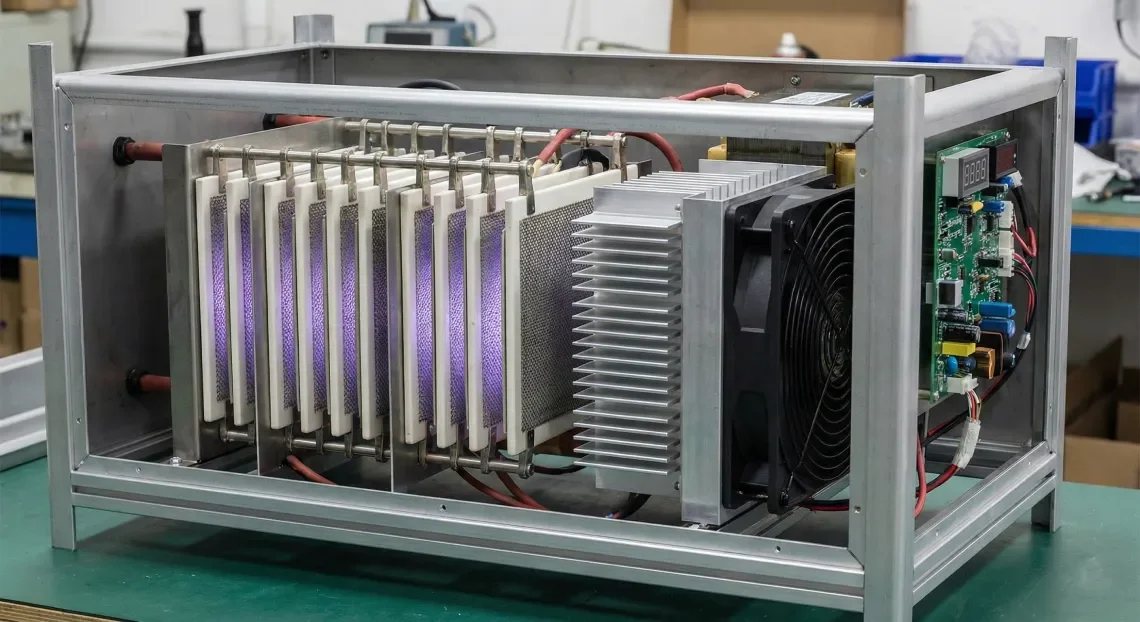
- Master Ozone Generator equipment suited to large spaces such as factories, warehouses and showrooms.
- Reaches every corner: as a gas, ozone travels to high racking, ceiling voids, behind machines and dead corners that wiping or spraying cannot reach easily.
- Adds no new chemicals, unlike fragrances and odour-neutralising sprays that leave substances in the air.
The process in brief
- Site survey and assessment: floor area, type of floor system, the date coating finished, ventilation, and materials likely to be holding odour.
- TVOC measurement before treatment at key points such as the centre of the factory, the packing area and the shop counter.
- Preparation: everyone, pets and plants leave the building; sensitive goods are removed or covered; doors and windows are closed; the team confirms nobody remains inside.
- Ozone treatment in an empty, closed space for a duration matched to the size of the area and the level of odour.
- Rest and ventilation: ozone is allowed to revert to oxygen, then the space is aired before anyone goes back in.
- TVOC measurement after treatment, compared against the baseline, followed by aftercare advice.
Safety first: ozone treatment is carried out only in an empty, closed space. People, pets and plants must stay out until the rest and ventilation period is over. The epoxy should also be cured hard and walkable as the manufacturer specifies before treatment. Ozone is a supporting step to deal with residual odour; it does not replace proper curing, cleaning or good ventilation.
10 reasons shops and factories choose ozone after a new epoxy floor
- It tackles the cause. Ozone reacts with odour molecules rather than covering them with perfume. See the chemical-residue removal service page for details.
- You get numbers. Before-and-after TVOC readings give safety and quality teams data to support the decision to reopen an area.
- Faster reopening. According to the service information, the space is ready about two hours after treatment, so it can be scheduled overnight or at a weekend.
- Built for big spaces. Warehouses and factories of hundreds of square metres, where charcoal or coffee grounds simply can't keep up.
- No residue. Ozone reverts to oxygen and doesn't add new chemicals to goods or surfaces.
- Handles layered odours. The new chemical smell plus leftover mustiness and mud odour from the flood, in one visit.
- Helps reduce microbes in air and on surfaces. According to the service information, ozone helps reduce bacteria, viruses and mold, which often appear alongside odour after a flood.
- Looks after your team. Staff no longer have to endure a sharp smell all shift after an already stressful flood.
- Protects your shop's image. Customers notice cleanliness, not the smell of a construction site.
- Experts handle the whole process, from site assessment and safety planning to the results report. Ask through the service page or call 065-556-6294.
Before ozone
- Sharp ammonia-and-solvent smell throughout the building
- Staff complain of headaches and stinging eyes; some call in sick
- Cartons and stock on the shelves start to smell of chemicals
- Musty, muddy flood odour still mixed in
- No numbers to show whether the air is improving
After ozone
- Chemical smell noticeably reduced on entering the building
- Staff can work comfortably again
- Lower risk of goods picking up more odour
- Flood mustiness dealt with at the same time
- Before-and-after TVOC readings to support decisions
Example case (a simulated situation to explain the steps, not a verified review)
A building-supplies shop in Bueng Kum that had to reopen by Monday
Nid runs a mid-sized building-supplies and electrical shop in Bueng Kum. Floodwater entered the shop in late September 2026, and the epoxy floor in both the front sales area and the rear warehouse peeled away in sheets. Once the water receded, she had the contractor grind off the old coating, wait for the concrete beneath to dry as advised, and lay a completely new system.
After the floor had cured to the point the contractor said it could be walked on, the smell was still so strong that her staff didn't want to go into the warehouse. Nid contacted WHD. The team surveyed the site and measured TVOC in the warehouse, at the sales counter and in the cable storage corner. They suggested moving out empty cardboard boxes and staff chair cushions that had soaked up the odour so they could air outside, clearing everyone from the building, and treating it with ozone on Saturday evening.
After the rest and ventilation period, the team measured again and showed her the comparison. On Monday, Nid says, her staff walked into the warehouse without the tight cloth masks they had been wearing the week before, and customers at the counter stopped asking about the smell. She also planned to run the extractor fans every morning for the first week and to move the leftover tins of thinner outside the building.
The lesson from this example is that ozone works best as one step in a properly ordered recovery plan, not as a substitute for curing, cleaning or ventilation.
Recovery checklist for shops and factories: before and after ozone
Before laying a new floor
- Shovel out mud, wash floors and lower walls, and remove oil residue completely. Wear rubber gloves, boots and a mask.
- Cut power to zones that flooded and have an electrician inspect the system before switching back on.
- Let the concrete slab dry as long as the flooring contractor advises; moisture under the coating is what makes epoxy peel again.
- Ask the contractor about low-odour or low-VOC products if they suit your use.
- After washing, disinfect flood-contaminated surfaces such as shelving, counters and handles with a medical-grade disinfectant like Chemgene HLD4H, at the dilution on the label.
During and after coating
- Follow the manufacturer's curing time strictly.
- Ask contractors to take mixing buckets, thinner and solvent-soaked rags out of the building every day.
- Move odour-absorbing stock to another area temporarily if you can.
- Ventilate whenever the weather allows.
On treatment day
- Everyone, along with pets and plants, leaves the area.
- Remove food, drinks and raw ingredients from the zones being treated.
- Inform security and post "no entry" signs.
- Close doors and windows as the team instructs.
After treatment
- Re-enter only when the team confirms the rest and ventilation period is over.
- Keep ventilating during the first few days.
- File the TVOC readings with your quality or safety records.
- Keep an eye on staff wellbeing; anyone with unusual symptoms should see a doctor.
Frequently asked questions
How long after laying epoxy should we schedule ozone treatment?
Wait until the floor has cured hard and is usable as the manufacturer or flooring contractor specifies. Ozone deals with the residual odour after that point. The WHD team will ask about your floor system to plan the right timing.
Can staff keep working during treatment?
No. Ozone treatment must be done in an empty, closed space. People, pets and plants must leave and may return only after the rest and ventilation period. According to the service information, the space is ready about two hours after treatment.
Will ozone damage the epoxy floor?
The team assesses the floor type and the materials in the space before starting and plans the treatment to suit the site. Any especially sensitive equipment or materials will be removed or covered on their advice.
What does measuring TVOC actually tell us?
It gives you comparable before-and-after numbers so owners, safety officers and quality teams can see the trend in airborne VOCs, rather than relying on the nose alone.
Can ozone replace ventilation?
No. Ventilation is always necessary. Ozone is a supporting measure that reduces residual odour in the air and in materials; the two should go together.
Can a restaurant with a newly coated kitchen floor use the service?
Yes. According to the service information, WHD serves homes, offices, factories, hotels and commercial spaces. Food and ingredients must be removed and nobody may be inside during treatment.
Does ozone prevent flooding or treat illness?
No. Ozone helps reduce odour and chemical residue during recovery. It doesn't prevent floods and it isn't medical treatment. Anyone who is unwell should see a doctor.
Your new floor looks great. Don't make customers and staff put up with the chemical smell.
Talk to WHD About Ozone Odour RemovalCall 065-556-6294 · LINE @whd268 · worldhealthdisinfection@gmail.com
Related pages
- Ozone odour and chemical-residue removal service
- Residential and building ozone disinfection
- Chemgene HLD4H medical-grade disinfectant
References
#OzoneTreatment #ChemicalOdourRemoval #EpoxyFloorSmell #ReduceVOCs #BangkokFloods2026 #FactoryFloodRecovery #PaintOdourRemoval
Keywords: epoxy floor smell, remove epoxy odour, factory chemical smell, ozone odour removal, reduce VOCs, Bangkok floods 2026, shop flood recovery, TVOC measurement


