Is Post-Flood Disinfection Dangerous? When Can Toddlers and Older Relatives Come Home? A Complete Q&A for Families in Mueang Samut Prakan, 2026
Last updated: 13 Oct 2026 | 28 Views |
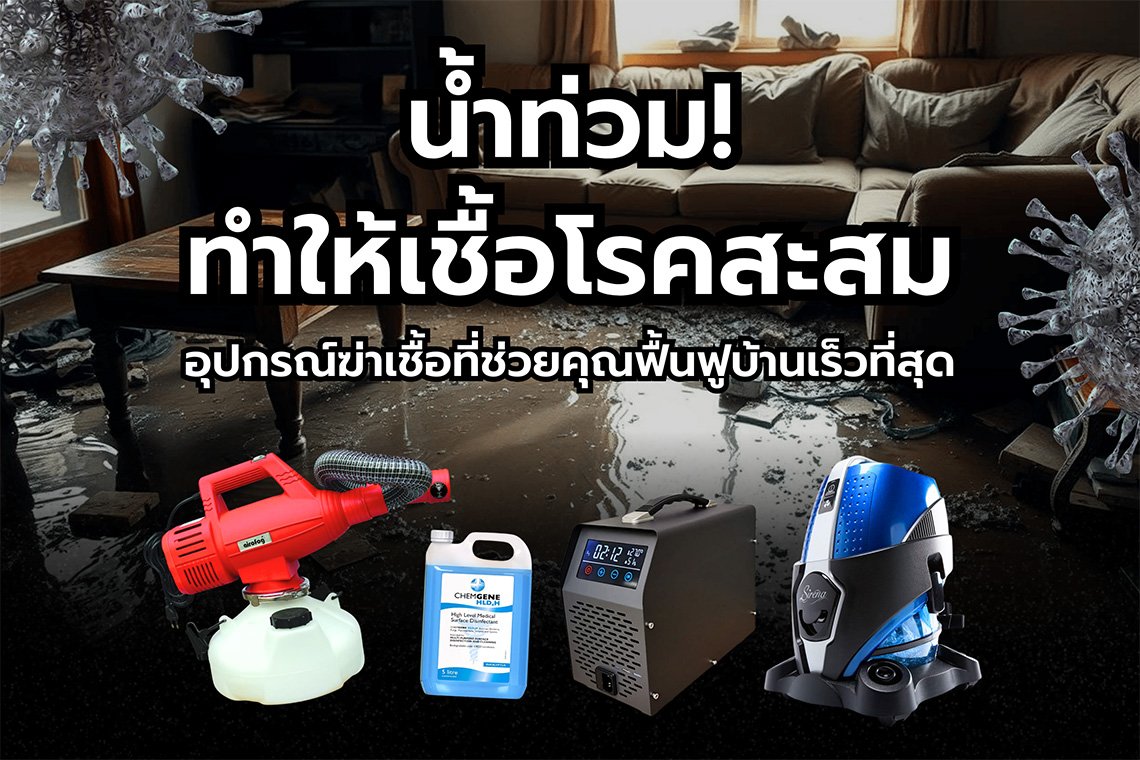
Is Post-Flood Disinfection Dangerous? When Can Toddlers and Older Relatives Come Home? A Complete Q&A for Families in Mueang Samut Prakan, 2026
A Story From the Field: Nida's Ten Questions
Nida lives in a two-story townhouse in the Bang Mueang area of Mueang Samut Prakan district with her husband, their two-year-old daughter and her seventy-eight-year-old grandmother, who has chronic lung disease. When the flood came, the family sent the little girl and grandma to stay with relatives in another subdistrict, while Nida and her husband came back regularly to check on the house.
When the water receded, the ground floor was covered in a thin film of mud. The corner wall of the living room had black mold spots. The shoe cabinet and the downstairs sofa gave off a heavy, musty smell, and the bathroom smelled of drains. The couple spent two full days washing out the mud, but the musty smell would not go away. Neither of them felt sure the house was clean enough for a toddler who loves crawling across the floor and putting everything in her mouth, or for a grandmother who already struggles to breathe.
Nida called the WHD team to ask about disinfection fogging and ozone treatment. But before she agreed to anything, she had a full page of questions ready. The first was, "Will the disinfectant be dangerous for my daughter?" The last was, "How many days do we need to wait before grandma can come home?" This article gathers those questions, along with the others that families in Samut Prakan ask us most often, and answers them as plainly as we can.
Nida's caution is exactly right. After a flood, many families are so exhausted and so eager to get back to normal that they rush the last steps. Taking a little time to ask the right questions protects the people who are most vulnerable, and usually costs nothing more than a day's patience. It also gives the cleaning team the information they need to plan properly.
Why Homes With Small Children and Older Adults Need Clear Answers on Safety
After a flood, a home carries two kinds of risk that have to be weighed carefully. One is the germs and mold the floodwater left behind. The other is the chemicals used for cleaning, if they are used the wrong way.
- Young children crawl on the floor, put their hands in their mouths and breathe faster than adults relative to their body size. That means they come into contact with both germs on the floor and any chemical residue more than adults do. Diarrhea-causing bacteria left in mud are especially dangerous for toddlers, who can become dehydrated very quickly.
- Older adults and people with lung disease can find it hard to breathe, start coughing or have their condition flare up when exposed to mold spores or strong chemical smells.
- Pregnant women should avoid contact with harsh chemicals and heavy cleaning work in a house that has just flooded.
- Pets walk on the floor, lick their fur and are very sensitive to smells.
Germs carried by floodwater, such as diarrhea-causing bacteria and the leptospira bacteria that cause leptospirosis, can remain in the mud film after the water recedes, while moisture in the walls lets mold appear within days. Doing no disinfection at all is therefore not the safe option. The right question is not "Should we disinfect?" but "How do we disinfect in a way that is safe for the people who live here?"
For a family like Nida's, that question has several parts. Who should leave the house, and for how long? What happens to the toys, the bottles and grandma's bedding? How will we know the air is fine again? A good plan answers all of these before the first fogger is switched on, so the family can make arrangements with relatives, pack what they need and know exactly when they are coming home. Certainty itself is a relief after weeks of living with uncertainty.
Risk Points Specific to Homes in Mueang Samut Prakan
Many homes in Mueang Samut Prakan are townhouses and row houses in housing estates. The area sits close to the sea and the mouth of the Chao Phraya River, so floodwater here is often a mix of rainwater, overflow from storm drains and, at times, tidal water pushing inland. What remains after the water drains away is a combination of mud, drain sediment and salt, which keeps walls damp for longer than usual.
- Narrow, deep townhouses. Rooms in the middle of the house have few windows and poor airflow, so musty smells linger for a long time.
- Bathrooms under the stairs. These often get drain odors backing up after a flood and are one of the first places mold appears.
- Kitchens added on at the back. These often sit lower than the main house, hold water the longest and are closest to the estate's drainage.
- Ground-floor bedrooms for older relatives. Many families put grandparents' bedrooms downstairs so they do not need to climb stairs, which means this room needs particular care.
Knowing these weak spots helps the team decide where to focus fogging, which rooms need ozone treatment and which areas should be checked again before the most vulnerable family members come home.
What Many Families Do Themselves, and the Risks They Don't Notice
- Mixing bleach too strong. It is tempting to think stronger is better, but concentrated chlorine fumes irritate the eyes and lungs, and the smell can hang around in a closed house for days.
- Mixing different cleaning products together. Mixing bleach with certain toilet cleaners or ammonia can release dangerous gases. Never mix them.
- Spraying air freshener to hide the smell. It does not disinfect or remove mold. It just adds more chemicals to the air that children and older relatives have to breathe.
- Buying an ozone machine and running it while people are at home. High-concentration ozone irritates the airways. It must only be used in an empty room, and the room must be ventilated before anyone goes back in.
- Bringing children home right after washing the mud out. The floor may still carry germs, and walls may still be damp enough for mold to keep growing.
None of these mistakes come from carelessness. They come from tired, worried people trying to protect their families as fast as possible. A clear plan simply removes the guesswork, and it means nobody has to choose between speed and safety.
The Solution: Fogging Plus Ozone, by a Team That Plans Safety First
The WHD team uses its disinfection fogging service with CHEMGENE HLD4H delivered through ULV foggers, applying the product at the rate the manufacturer specifies rather than pouring on concentrated solution. The disinfectant also does not have the harsh, sharp smell of chlorine. This is combined with the ozone treatment service to deal with musty odors and airborne mold spores. Once the room has been ventilated, the ozone breaks down back into oxygen.
A Step-by-Step Process Designed for Homes With Children and Older Adults
- Survey and questions about the household. The team asks whether there are young children, older adults, people with lung disease, pregnant women or pets in the home, so the timing and order of work can be planned around them.
- Advice on mud removal and what to throw away. Soft toys, stuffed animals, cushions and mattresses that soaked in floodwater should usually be thrown away. Plastic toys can be washed with soapy water.
- Chemgene HLD4H fogging. No family members should be in the area during fogging, especially children and older adults. The team fogs floors, walls, bathrooms and frequently touched surfaces.
- Ozone treatment. Rooms are sealed and treated according to their size, with no people, pets or plants inside. Delicate electronics, paintings and collectibles containing rubber are covered or removed on the team's advice, and a controlled ozone dose is used.
- Ventilation. Doors, windows and fans are opened until the air is fresh and there is no ozone smell left.
- Wiping surfaces children touch. Once surfaces are dry, we suggest wiping the areas where a child crawls and the dining table with clean water once more, for extra peace of mind.
- Follow-up check. The team returns to check odors and mold spots. If walls are still damp, they advise on ongoing moisture control.
The Order for Bringing the Family Home (General Guidance)
- Healthy adults can go back first, once surfaces are dry and ozone-treated rooms have been ventilated for the time the team specifies.
- Young children and pregnant women should come back after the adults have opened up the house, aired it out and checked there are no unusual smells, for example the following day.
- Older adults and people with lung disease should come back last, once the house is dry, the musty smell is gone and there are no damp mold patches left. If they have a regular doctor, it is worth asking for advice too.
- Pets can return at the same time as young children, after full ventilation and once the floor where they sleep has been wiped.
The exact timing depends on the size of the house, how damp it is and the weather. The team will tell you the right timing for your home when the work is finished.
A staged return like this has a practical benefit as well. The adults who go back first act as an early warning system. If they notice a lingering smell, feel a scratchy throat or spot a damp patch that was missed, it can be dealt with before the most sensitive family members arrive.
What Disinfection Can and Cannot Do
Being honest about limits is part of being safe. Disinfection fogging reduces germs on the surfaces it reaches, and ozone treatment reduces musty odors and airborne mold spores in a closed room. Together, they make a flooded home much healthier to live in. But they are not magic. They cannot dry out a wall that is still wet inside, they cannot rescue a mattress that soaked in floodwater for a week, and they cannot replace the basic work of shoveling out mud and washing surfaces. They also do not repair wiring, plumbing or structural damage.
The best results come when each step is done in the right order: remove mud and soaked materials, wash surfaces, let the house start drying, then disinfect and treat with ozone, then keep the house ventilated. When a team skips straight to the "spray" part, families are often disappointed when smells and mold return. When the whole sequence is followed, the improvement lasts.
Safety Questions Worth Asking Any Disinfection Provider
- Which disinfectant will you use, and can you show me the product label and its instructions?
- Will anyone need to leave the house during the work, and for how long?
- If you use ozone, how will you make sure nobody is inside, and how long will you ventilate afterward?
- What should I cover or move out, such as electronics, artwork or aquariums?
- When can healthy adults go back in, and when should children and older relatives return?
- Will you come back to check if the musty smell or mold returns?
A reliable team will answer these questions clearly before any work begins. If a provider cannot explain its safety steps in plain language, that is a good reason to keep looking.
10 Reasons Families in Samut Prakan Choose WHD
- Disinfection fogging at the manufacturer's specified rate, never more concentrated than necessary.
- CHEMGENE HLD4H has no harsh chlorine smell.
- Ozone treatment only in empty rooms, with ventilation every time before re-entry.
- The team asks about your household first instead of using one formula for every home.
- A clear return order for children, older relatives and pets.
- Fine mist reaches corners that wiping cannot, reducing germs left in the house.
- It tackles musty odors and mold spores that trigger allergies and asthma.
- The Chemgene HLD4H 750 ml spray is available for wiping high-touch points after you move back in.
- An add-on dust mite removal service is available for upstairs mattresses and sofas that did not flood.
- Every question answered before work begins, by phone or LINE.
Before and After: A Home Ready to Welcome Children and Older Relatives Back
Before
- A thin film of mud across the ground floor
- Black mold in the corner of the living room
- A musty sofa and shoe cabinet
- A drain smell in the bathroom
- Parents afraid to let their child crawl on the floor
After
- All ground-floor surfaces fogged
- A clear drop in musty odor after ozone treatment
- A clear return plan for every family member
- Flood-soaked soft toys thrown away and plastic toys washed
- The family back home with confidence
A Customer's Perspective (Sample Scenario)
"I sent about ten questions, and the team answered every one without getting impatient. They told us clearly which day we could go in, which day to bring our daughter back and to let grandma come home last. We followed the plan and felt so much better. Our little girl is back to crawling around the house like before."
— Mother of one, Bang Mueang, Mueang Samut Prakan district (scenario based on field experience)
Q&A: The Questions Families Ask Most
Q: Is the disinfection solution dangerous for children?
A: Every disinfectant should be used according to the manufacturer's instructions. The team uses Chemgene HLD4H at the specified rate and fogs while children are out of the area. Once surfaces are dry and the house has been ventilated, it can be used normally. For extra peace of mind, you can wipe the areas where your child crawls with clean water once more.
Q: How long do we need to stay out of the house during the work?
A: It depends on the size of the house and how many rooms need ozone treatment. The team gives an estimate on the survey day and confirms again when the work is done exactly when you can go back in.
Q: Does ozone stay in the house afterward?
A: Ozone is a gas that naturally breaks down back into oxygen. With enough ventilation, it does not linger. But nobody, human or animal, may be in the room during treatment.
Q: What should we do with our child's toys?
A: Soft toys and stuffed animals that soaked in floodwater should be thrown away. Plastic or hard rubber toys can be washed with soapy water, rinsed with clean water and dried. There is no need to spray disinfectant directly onto toys.
Q: Can we keep using baby bottles, plates and spoons?
A: Dishes that touched floodwater should be washed with dish soap and then boiled or scalded in hot water before use. Baby bottles and teats that sat in floodwater for a long time should be replaced.
Q: Grandma has lung disease. When should she come home?
A: She should be the last to return, once the house is dry, there is no musty smell and there are no damp mold patches. If she starts coughing or has trouble breathing after coming home, she should see a doctor.
Q: I'm pregnant. Should I help clean the house myself?
A: It is best to avoid heavy work, direct contact with mud and strong chemicals. Let other family members or the team do it, and come back after the house has been ventilated. If you have any health concerns, ask the doctor managing your pregnancy.
Q: Do our pets need to stay somewhere else?
A: Yes, during fogging and ozone treatment, pets must be out of the house. Fish tanks and bird cages should be moved out of rooms being ozone-treated on the team's advice. Bring pets back after ventilation.
Q: After disinfection, will mold never come back?
A: Fogging and ozone treatment deal with existing mold and musty odors, but if walls are still damp, mold can return. Keep opening the house to ventilate it and keep reducing humidity.
Checklist Before Bringing Your Child and Grandparents Home
- No musty or unusual chemical smell when you open the front door.
- The areas where your child crawls are dry, clean and wiped with clean water.
- Flood-soaked soft toys, mattresses and cushions have been thrown away.
- An electrician has checked the ground-floor sockets and outlets.
- Broken glass and sharp debris carried in by the water have been cleared.
- You have a plan to open windows for ventilation every day for the first few weeks.
It can also help to bring a few familiar things back with the children, such as a favorite blanket that was kept upstairs or a toy that stayed dry. Returning to a home that smells fresh and still feels like home makes the transition easier for little ones who may have found the flood frightening.
For more on staying healthy after floods, see the Department of Health, the Department of Disease Control and the World Health Organization's fact sheet on floods.
The First Two Weeks Back Home
The days after the family returns are when small problems show up. Keep an eye on a few simple signs. If your toddler develops diarrhea, a rash or a fever, or if grandma's cough gets worse, contact a doctor and mention that the house was recently flooded. Open the windows for at least an hour each morning and evening. Run the bathroom exhaust fan after every shower. Check the bottom of the walls and the back of cabinets once a week for new dark spots. If the musty smell creeps back, take a photo of the area and send it to the WHD team on LINE. Most issues caught at this stage can be fixed with spot treatment rather than a whole-house job, and you will not have to move the family out again.
Still Have Questions? Ask the Team Before You Decide
The WHD team is happy to answer every safety question before planning disinfection fogging and ozone treatment for your home.
See Disinfection Service – Click Here
Book Ozone Treatment – Click Here
Call 065-556-6294 · LINE @whd268 · Email worldhealthdisinfection@gmail.com
Related Links
- Residential ozone disinfection
- Ozone treatment for odors and chemical residue
- CHEMGENE HLD4H disinfectant spray
- All articles
Health references: World Health Organization (WHO): Floods · Department of Health, Thailand
#PostFloodDisinfection #SafeDisinfectant #OzoneTreatment #MoldRemoval #MustyOdorRemoval #DisinfectionService #FloodHomeRecovery #SamutPrakan
Keywords: is post-flood disinfection safe, disinfectant safety for children, when can kids and elders return home, ozone treatment safety, disinfection Q&A Mueang Samut Prakan 2026


