Is Disinfection Spray Safe? Answers for Homes with Asthmatic Children, Pets and Older People
Last updated: 16 Nov 2026 | 8 Views |
Is Disinfection Spray Safe? A Mother's Questions About an Asthmatic Son, Two Kittens and a 90-Year-Old Grandmother Under One Roof
The safety of disinfection spraying depends on the product, its concentration, how it is applied and what happens before and after, not just the word "safe" on a label.
(An illustrative story based on situations we commonly see in the field)
Nuch lives in a detached house off Rama 2 Road with her seven-year-old son, who has asthma, two cats and her 90-year-old grandmother, who uses a wheelchair. After her grandmother came home from hospital following pneumonia, the doctor advised extra care with household hygiene.
Nuch wanted a professional disinfection service before her grandmother returned, but she was very worried. She had once used a strong-smelling disinfectant spray in her son's room and he started coughing and wheezing so badly he needed his inhaler. She had also read in a cat owners' group that some chemicals are dangerous for cats.
She searched for "is disinfection spray safe", "is disinfection dangerous" and "disinfection with cats at home". The information was contradictory: some sources said everything was safe, others said never use it in homes with pets, which only confused her more.
Nuch called several providers and asked each the same questions: which product do you use, do you have safety information, what should we do with my son, the cats and grandma during spraying, and when can we come back in?
The World Health Disinfection team answered every question, sent her the product information to review and explained a procedure designed for homes with vulnerable people. Nuch decided to go ahead.
The impact is bigger than you think: the worries of families with vulnerable members
● Children with asthma or allergies
Fumes from strong chemicals, such as concentrated chlorine or the perfume in sprays, can trigger airway narrowing, coughing and breathing difficulty.
● Pets sensitive to chemicals
Cats and some other pets are sensitive to certain chemical groups and groom themselves after touching surfaces, so extra care is needed.
● Older people with weak lungs
An older person recovering from pneumonia needs both a home free of germs and air free of irritants.
● Contradictory information online
Conflicting advice leaves families unable to decide, and sometimes they do nothing at all, which carries risks of its own.
What determines whether disinfection spray is safe
The first factor is the active ingredient and formula. Some products give off strong fumes or are corrosive, while others are designed for low toxicity and no harsh smell. Asking a provider for product information and safety data is reasonable and recommended.
The second is concentration. The same product can be safe or unsafe depending on the mixing ratio, so following the manufacturer's dilution is essential.
The third is procedure: everyone, including pets, leaving the area during fogging, waiting for the full contact time, ventilating before returning, and rinsing surfaces that touch food or mouths.
Guidelines for homes with children, older people and pets
During fogging, everyone and all pets should leave the area or the house. Put pet bowls, litter trays, children's toys, baby bottles and toothbrushes in closed cupboards or take them out. Cover fish tanks and switch off air pumps.
Afterwards, wait the time our team recommends, open the windows, wipe surfaces children and pets touch most, such as the child's bedroom floor and the cats' sleeping spots, with a cloth dampened in clean water as advised, and rinse anything that goes into mouths before use.
For children with asthma, keep prescribed medicines ready and let them return once the room is well ventilated. If you have specific concerns, consult the child's doctor.
Questions to ask every provider
Which product do you use? Can you share product information and safety data? What concentration will you mix? What equipment do you use? How long must people and pets stay away? What should we prepare beforehand, and what should we do afterwards? A good provider should answer all of these clearly.
Never mix cleaning chemicals at home
One of the most important safety rules has nothing to do with professional services: never mix bleach with other cleaning products, such as ammonia-based or acidic cleaners. Some combinations release dangerous gases. Many household accidents happen when people try to make a "stronger" disinfectant themselves. If you want extra protection, use one appropriate product correctly, or ask a professional, rather than combining products.
Why the usual DIY fixes don't solve it
⚠ Buying strong-smelling sprays to use yourself
Fumes and fragrance may trigger a child's asthma.
⚠ Mixing bleach with other cleaners
Some chemical combinations release dangerous gases. Never do this.
⚠ Keeping pets inside during spraying
They may come into contact with droplets and lick surfaces that are not yet dry.
⚠ Doing nothing out of fear
A home with an immunocompromised person still faces risk from germs that are not dealt with.
Signs your space needs professional disinfection
- ⚠ Two or more people in the same home, office or classroom have fallen ill with an infectious disease within a short period
- ⚠ Someone has just recovered from an infectious illness and is about to share the space with others again
- ⚠ The space is used by many people, such as a school, clinic, gym or call centre, and outbreak season is starting
- ⚠ Elderly people, babies, pregnant women or people with weak immunity use the space
- ⚠ The property has been flooded, has persistent damp, or shows mould stains on walls and furniture
- ⚠ You are moving into a home or office whose previous use you do not know
- ⚠ You need proof of disinfection to reassure customers, parents or employees
If any of these apply, talking to a specialist early saves time, medical costs and damage to your business, compared with waiting for the problem to grow. A short survey visit is often enough to tell you whether a full treatment is needed, which areas matter most, and how often treatment should be repeated. That way you spend money only where it makes a real difference to the people who use the space every day.
The right solution: Disinfection Spraying Service
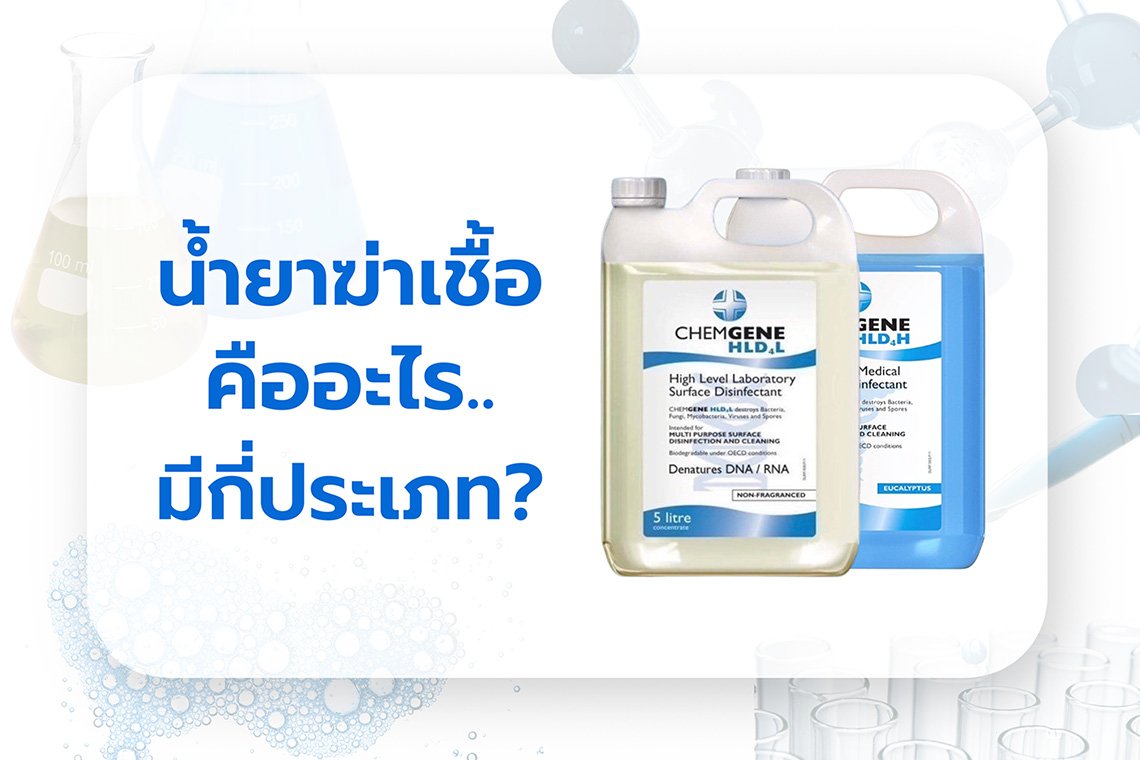
Our team sent Nuch the Chemgene HLD4H product information to review in advance, explaining that it has low toxicity when used as directed, has no chlorine-like smell and would be mixed at the manufacturer's ratio.
On the day, Nuch took her son, the cats and her grandmother to a relative's house. Technicians stored the cats' bowls, litter tray and her son's toys in an untreated room, wiped touch points, ULV fogged the house, waited for the full contact time and ventilated, then wiped her son's bedroom floor and the cats' sleeping areas with a cloth dampened in clean water.
The family came home in the evening. Her son had no coughing, both cats were fine, and her grandmother returned from hospital to a clean house with fresh air. Nuch said what gave her confidence was getting a clear answer to every single question.
Disinfection Spraying Service How it works and why it is more effective
A professional disinfection spraying service is far more than spraying a bottle around the room. Our team uses ULV (ultra-low volume) foggers that turn the disinfectant into very fine droplets of roughly 5–50 microns. These droplets stay airborne long enough to reach corners, the undersides of desks, behind cabinets, curtains and surfaces that hands never reach.
We use Chemgene HLD4H, a hospital-grade disinfectant tested to reduce bacteria, viruses and fungi by up to 99.99% under the product's test standards. It does not corrode surfaces, has none of the harsh smell of chlorine bleach and leaves no sticky film on furniture.
The secret of disinfection that actually works is contact time. The disinfectant has to stay wet on a surface long enough to destroy the pathogens. A quick wipe with a cloth cannot do that, but an even layer of ULV mist settling over the whole space can.
Product used in this service: Chemgene HLD4H disinfectant
How germs really spread indoors
Most people imagine infections spread mainly through the air, but indoor transmission usually follows three routes at the same time. The first is large droplets from coughing, sneezing and talking, which travel a metre or two before falling onto nearby surfaces. The second is smaller aerosol particles that can hang in poorly ventilated rooms, especially in air-conditioned spaces where windows stay closed. The third, and the one most often underestimated, is contact: a hand touches a contaminated door handle, then touches the face.
Studies of offices and homes have shown that a virus placed on a single door handle in the morning can be found on a large share of commonly touched surfaces within a few hours, simply because people move around and touch things. That is why cleaning only the surfaces you can see, or only the room where the patient slept, so often fails to stop an outbreak.
Bacteria and fungi add another layer. In Thailand's warm, humid climate, moisture in bathrooms, kitchens, air-conditioning units and fabrics lets bacteria and mould multiply quickly. These organisms do not just cause bad smells; they can trigger allergies, skin infections and respiratory problems, particularly in children, elderly people and anyone with a weakened immune system.
Why World Health Disinfection
World Health Disinfection is a Thai company that both supplies professional disinfection equipment and provides on-site services. The same ULV foggers, Chemgene disinfectants and ozone generators we sell to hospitals, government agencies, hotels and factories are the tools our own technicians use in your home or business. You get equipment-level expertise rather than a general cleaning crew.
We believe good disinfection is a process, not a product. Every job starts with understanding the risk: who is ill, how the space is used, which materials need care and what outcome matters to you. Then we choose the right disinfectant, dilution, equipment and contact time. Finally, we explain what we have done and how to keep the space safe afterwards.
Our team serves Bangkok and surrounding provinces, and works with homes, condos, clinics, schools, nurseries, offices, restaurants, hotels, warehouses and factories. Whether you need a one-off treatment after an illness or a regular schedule during outbreak season, we will design a plan that fits your space and budget.
10 reasons to choose our Disinfection Spraying Service
- Product information sent for you to review before deciding
- Hospital-grade Chemgene HLD4H with low toxicity when used as directed
- No harsh chlorine or perfume smell
- Always mixed to the manufacturer's ratio
- A specific procedure for homes with children, older people and pets
- Detailed advice on preparation and aftercare
- Full contact time and ventilation before handover
- ULV mist that uses little product and leaves floors dry
- A team that answers every question honestly
- Service for homes across Bangkok and nearby provinces
Before vs. after the service
❌ Before
- • Worried the disinfectant would trigger her son's asthma
- • Unsure whether it was safe for the cats
- • Contradictory information online
- • Grandma about to come home from hospital
- • Close to deciding to do nothing
✅ After
- • Clear product information and procedures
- • No coughing for her son
- • Cats safe and well
- • Grandma home to a clean house
- • A family confident in ongoing home care
Common myths about disinfection
❌ "If it smells clean, it is clean."
A strong scent usually comes from fragrance, not from germ-killing action. Many effective hospital disinfectants have little or no smell, while heavily perfumed cleaners may do very little against viruses.
❌ "Stronger bleach works better."
Over-concentrated bleach damages surfaces, releases irritating fumes and can even be less effective on dirty surfaces. The right product at the right dilution, with enough contact time, is what matters.
❌ "One spray protects us for months."
Disinfection removes the germs present at the time of treatment. New germs arrive whenever people come and go, so treatment is most valuable at high-risk moments and as part of a routine.
❌ "Fogging replaces cleaning."
Dirt and grease shield germs from disinfectants. Visible dirt should be cleaned first, then disinfected. Professional teams combine both steps.
Our 6-step service process
- Site survey and risk assessment – We ask about recent illness, high-touch areas, floor size and sensitive materials, so the plan matches the real risk.
- Choosing the disinfectant and dilution – The solution is mixed exactly to the manufacturer's ratio for maximum effect and surface safety.
- Preparing the space – Food, dishes and personal items are put away, unnecessary electronics switched off, and people and pets leave the area during treatment.
- Wiping shared touch points – Door handles, light switches, rails, tables, remotes and shared devices are disinfected by hand first, because they are the main transmission points.
- ULV fogging of the whole area – We fog from the far end of the room towards the exit, covering the air, walls, ceiling, floor and furniture.
- Contact time, ventilation and handover – We wait the required contact time, ventilate, inspect, and hand the space back with aftercare advice.
Where our disinfection spraying service is used
- ◉ Homes and condos after someone in the family has had flu, COVID-19, RSV or a stomach virus, and before welcoming a newborn or an elderly relative home from hospital.
- ◉ Schools, kindergartens and child-care centres at the start of each term, during the rainy season and whenever a case of an infectious disease is reported.
- ◉ Offices, call centres and co-working spaces where many people share desks, meeting rooms and air-conditioning.
- ◉ Clinics, dental practices, nursing homes and rehabilitation centres that care for people with weaker immunity.
- ◉ Restaurants, cafés, hotels, gyms, salons and spas, where customers expect a visibly high hygiene standard.
- ◉ Factories, warehouses, temples, community halls and government buildings that serve large numbers of people every day.
Each type of space has its own risks, materials and schedules. That is why every treatment begins with a survey and a plan designed around how the space is really used.
How to prepare for your appointment
- ✔ Tell our team about any illness or suspected disease
- ✔ Store food, medicine and children's items in closed cabinets
- ✔ Move pets and fish tanks out, or cover them completely
- ✔ Switch the air-conditioning off during fogging and back on after ventilation
- ✔ Plan for the area to be empty for about 1–2 hours
How to choose a disinfection spraying service that really works
✅ Check the disinfectant
Ask exactly which product is used and whether it has certificates or test results. A good disinfectant covers bacteria, viruses and fungi without damaging surfaces.
✅ Check the equipment
ULV foggers produce small, even droplets, unlike ordinary pressure sprayers whose large droplets fall quickly and leave floors soaking wet.
✅ Check the process
A good provider surveys the site, wipes shared touch points and explains the waiting time before re-entry, instead of spraying for five minutes and leaving.
✅ Check the team's protective gear
Technicians should wear protective suits, masks, gloves and goggles, which reflects their standards and keeps everyone safe.
✅ Check the aftercare advice
Effective disinfection comes with clear aftercare guidance, so germs do not build up again within days.
How to look after the space after disinfection
- ❀ Wash hands with soap after coming home and before touching shared items
- ❀ Wipe high-touch points at least once a day while someone is ill
- ❀ Keep the sick person's cups, towels and pillows separate
- ❀ Clean air-conditioner filters every 2–4 weeks to reduce circulating dust and germs
- ❀ Consider repeat treatment during outbreak season or whenever an infectious illness occurs in the space
❝ What the owner learned
“The word "safe" means nothing if nobody can explain why it is safe and what you need to do. Once every question was answered, fear turned into confidence.”
✎ Key takeaways before you decide
- Most germs spread through shared surfaces, not only through the air, so cleaning only what you can see is not enough.
- The right disinfectant, the correct dilution and enough contact time are the three ingredients of disinfection that really works.
- ULV fogging carries disinfectant evenly into corners, fabrics and surfaces that cannot be wiped.
- The best moments to treat are after the first case of illness, before outbreak season, and before vulnerable people use the space.
- Disinfection lasts longest when combined with handwashing, isolating the sick and daily cleaning routines.
Frequently asked questions (FAQ)
❓ Is disinfection spray safe?
It depends on the product, concentration and procedure. Chemgene HLD4H has low toxicity when used as directed, and people and pets must leave the area during fogging.
❓ Can a home with cats be disinfected?
Yes. Take the cats out, store bowls and litter, and wipe their sleeping areas with a damp cloth after ventilation.
❓ When can a child with asthma return?
After ventilation for the time our team recommends and when there is no smell of disinfectant. Consult a doctor if you have concerns.
❓ Can I see the product information first?
Yes. Our team is happy to send product information for you to review.
❓ What should pregnant women be careful of?
Leave the area during fogging and return after ventilation, and consult your doctor about any specific concerns.
✓ People searching for this also search for
is disinfection spray safe is disinfection dangerous disinfection with cats disinfection with dogs disinfection and asthma child-safe disinfectant odourless disinfectant disinfection during pregnancy disinfection for elderly homes is Chemgene safe
Related services and articles
- Disinfection Spraying Service
- Ozone Disinfection Service
- Residential Ozone Disinfection
- Ozone Paint-Odour Removal
- Dust Mite Removal Service
- All articles
References:
Don't wait for the problem to spread — talk to us today
The World Health Disinfection team will survey your space, quote a price and plan the right treatment for homes, condos, offices, schools, factories and businesses of every kind.
Related tags: #DisinfectionService #บริการพ่นฆ่าเชื้อ #SafeDisinfection #PetSafe #ChildSafe #Chemgene
Keywords: is disinfection spray safe, is disinfection dangerous, disinfection with pets, disinfection and asthma, child-safe disinfectant, disinfection spraying service


