Mexico Issued an Mpox Alert the Day WHO Declared an Emergency (2024): Disinfection Lessons for Airports
Last updated: 10 Nov 2026 | 11 Views |
Mexico Issued an Mpox Alert the Day WHO Declared an Emergency (2024): Disinfection Lessons for Airports
On the day WHO raised its highest alert, Mexico issued a warning straight away. How should Thailand's airports and border checkpoints be ready?
The True Story: The Same Day as WHO's Declaration
Mexico News Daily reported in August 2024 that on 14 August 2024 Mexico's National Commission for Epidemiological Defense warned of a possible mpox outbreak, on the same day WHO declared mpox a public health emergency of international concern.
Mexico then had 212 probable and 49 confirmed cases that year, none of them clade I. WHO Director-General Dr. Tedros said a coordinated international response was needed.
The Key Lesson: A Country's Gateway Must Be Ready First
Airports, land borders and ports in Thailand handle tens of thousands of travellers a day. The lessons are:
- Early alerts give agencies time to prepare
- Airports have many shared touch points: scanner trays, rails and check-in kiosks
- Checkpoint medical rooms must be ready for travellers with symptoms
- Officers need protective equipment and to know the procedure
- Communicate without stigmatising travellers from any country
How Mpox Spreads
According to the World Health Organization, mpox spreads through close contact with an infected person and through contaminated objects such as clothing or linen. Symptoms usually start 1 to 21 days after exposure and include rash, fever, sore throat, headache, muscle aches and swollen lymph nodes, typically lasting 2 to 4 weeks. The WHO advises frequent handwashing and to disinfect shared spaces frequently.
Risk Register for Airports and Immigration Checkpoints
- Shared scanner trays and kiosks: likelihood high / impact medium / level high. Mitigation: Wipe in rounds all day. Owner: Terminal manager
- Crowded airport restrooms: likelihood high / impact medium / level high. Mitigation: Frequent cleaning and late-night fogging. Owner: Housekeeping
- Travellers with symptoms at the checkpoint: likelihood medium / impact high / level high. Mitigation: Isolation room and coordination with the disease control checkpoint. Owner: Disease control checkpoint
- Officers lacking protection: likelihood medium / impact medium / level medium. Mitigation: PPE kits and training. Owner: Safety team
- Social media rumours: likelihood low / impact high / level medium. Mitigation: Official communication of measures. Owner: Communications
7 Steps for Airports and Checkpoints
- Follow WHO and DDC announcements and adjust measures immediately
- Wipe scanner trays and kiosks in rounds all day
- Add restroom cleaning rounds and handwashing points
- Prepare an isolation room at the checkpoint with a referral procedure
- ULV-fog during quiet periods; areas are usable about 30 minutes later
- Ozone-treat isolation rooms after use with no people or pets, then ventilate
- Train officers on PPE and on avoiding stigma
How ULV Disinfection Fogging Helps
The World Health Disinfection disinfection service uses ULV fogging machines that turn the disinfectant into a fine mist. It settles across the whole area, including corners, curtains, upholstery and surfaces that hand wiping cannot reach.
- Whole-area coverage without relying on wiping spot by spot
- Quick return to use, typically about 30 minutes after fogging
- Uses Chemgene HLD4H, which meets EN 14476 for virucidal activity according to the product page
- The team wears full protective equipment, so owners and staff do not take the risk themselves
- Report and photos after the job for customers, management or authorities
- Tax invoice with 3% withholding tax for companies and agencies
Ozone Treatment for Closed Rooms and Stuffy Spaces
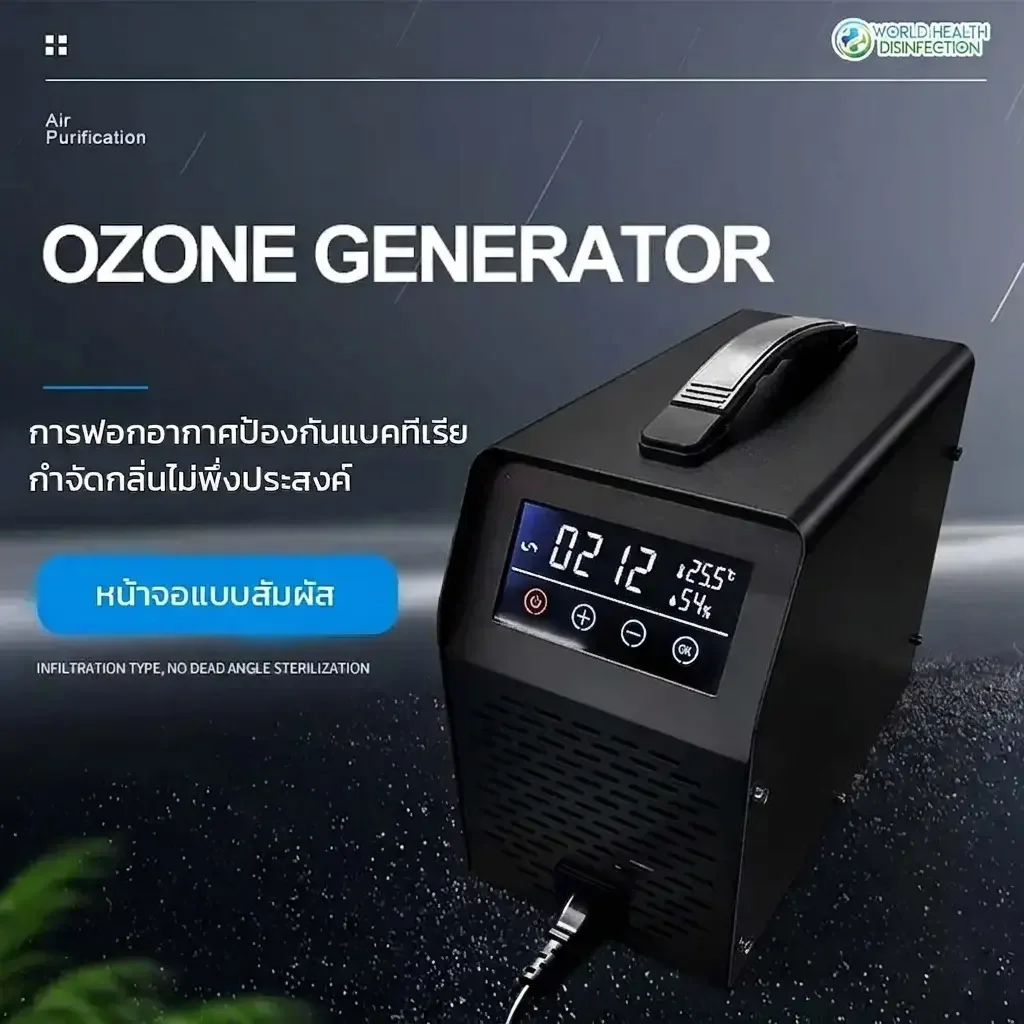
The World Health Disinfection ozone treatment service uses machines that generate ozone gas from oxygen in the air. It suits closed rooms such as meeting rooms, bedrooms, classrooms, sick bays and vans, helping reduce germs in the air and on surfaces and removing stale odours. Ozone breaks back down into oxygen after treatment, leaving no residue.
- Works alongside disinfection fogging: spray or wipe surfaces first, then use ozone for the air and corners of closed rooms
- No people or pets in the room during treatment: the team seals the room and runs a timer
- Ventilate after treatment before normal use resumes
- Machines tested by Intertek, according to WHD's service page
- Ideal after someone has been ill, such as recovered patients' rooms, shared bedrooms and shuttle vans
Before and After
Frequently Asked Questions
Q: When did WHO declare the mpox emergency? A: WHO declared it on 14 August 2024.
Q: How can a 24-hour airport be fogged? A: Choose zones and quiet periods, cordon off the area, and use it about 30 minutes after ULV fogging.
Q: Can the fogging disinfectant be used where an mpox patient has been? A: The team uses Chemgene HLD4H, which meets EN 14476 for virucidal activity according to the product page. Fogging reduces germs on surfaces but does not replace treatment, isolation or medical advice.
Q: What should be done with a patient's sheets, towels and clothes? A: The WHO says contaminated clothing and linen can spread mpox. Wash them separately, avoid shaking them, wear gloves when handling and wash hands afterwards.
Q: Can airport agencies or companies get a tax invoice? A: Yes. Tax invoices are issued and 3% withholding tax is supported. Call 065-556-6294 or LINE @whd268.
Related Links and Sources
Prevent Mpox with Disinfection Fogging and Ozone Treatment
Mexico issued its warning on the day WHO declared the emergency. A gateway that is ready first protects both travellers and officers. Reduce the risk with the World Health Disinfection disinfection service for passenger terminals, restrooms and checkpoints, and the ozone treatment service for checkpoint isolation and medical rooms. To book, call 065-556-6294 or LINE @whd268.
Keywords: mpox, airport, immigration checkpoint, airport disinfection, mpox disinfection service


